Why 2026 was a difficult year — and what it means if you own a thatched roof
2026 was one of the busiest and most frustrating years I have had in more than 25 years of thatching. The work itself did not slow down. Finding people who could do it properly, and who would stay, proved far harder than I expected.
At the start of the year I agreed to teach water-reed thatching at Donegal Thatching School, every second weekend, amounting to 20 days in total. I was already fully booked, but I took it on because skilled thatchers are extremely scarce in Ireland and I hoped one or two of the students might want to join the trade and, in time, the business. The people who run the school selected the participants. They were local, capable, and already in steady jobs. As far as I know, they have all remained in those jobs. I am glad the course gave them a skill, but none of them took up the chance of a new career in thatching. That was disappointing, and it left the original problem unsolved.
Through the first half of the year I tried five different people on the tools. None of them stayed. Thatching is physical, weather-dependent, and slow to learn. A lot of people like the idea of it. Fewer want the reality of stripping an old roof with the dust and dirt included, working at height, and away from home for weeks, and accepting that competence takes years rather than weeks.
When local recruitment failed, I looked further afield. I added a jobs page to ThatchingIreland.com and brought in experienced thatchers from overseas, people used to working on roofs in several European countries, including Ireland. The arrangement did not work out. I found myself training people I was paying, on roofs where the mistakes would be expensive. The numbers simply did not stack up, and the arrangement ended.
The gap was not effort or general roofing ability. It was local knowledge, and the particular skills that old Irish roofs demand.
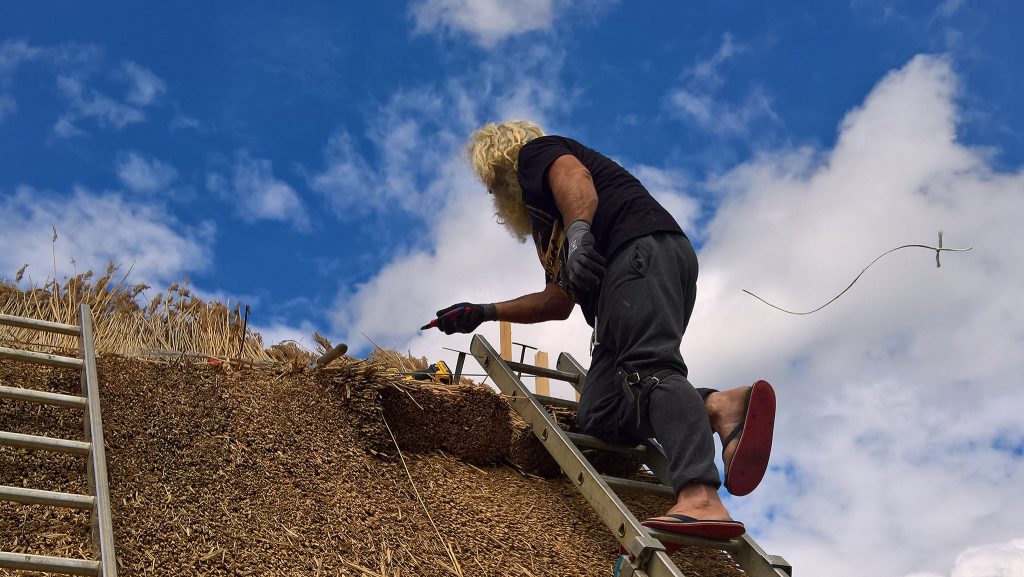
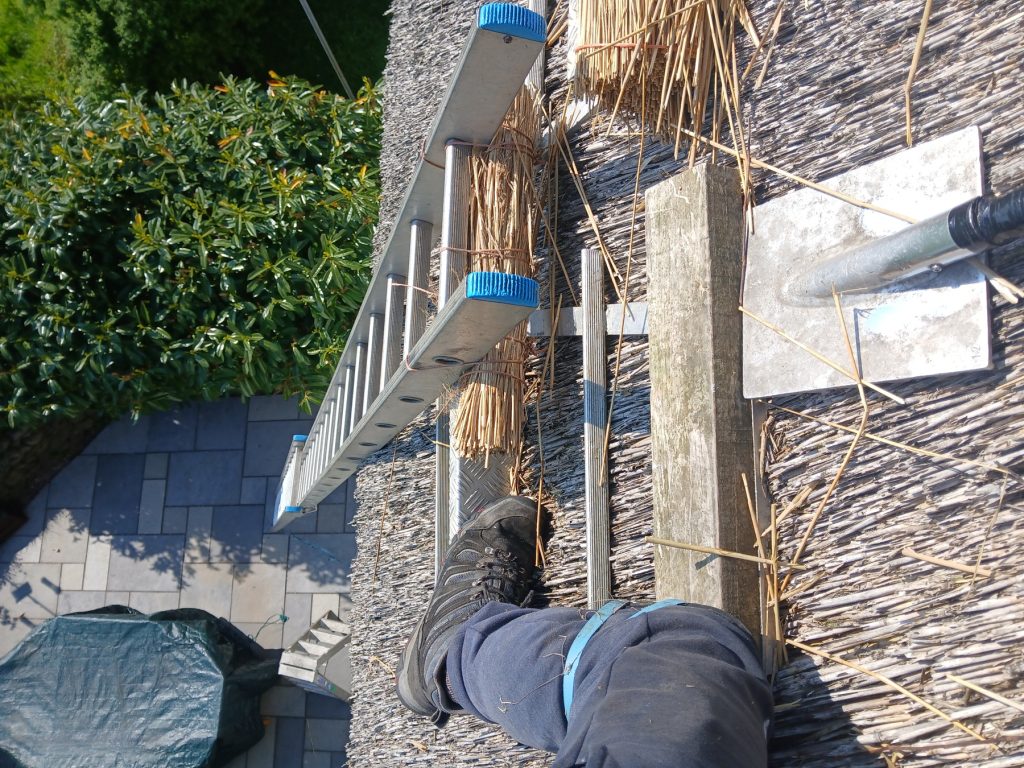
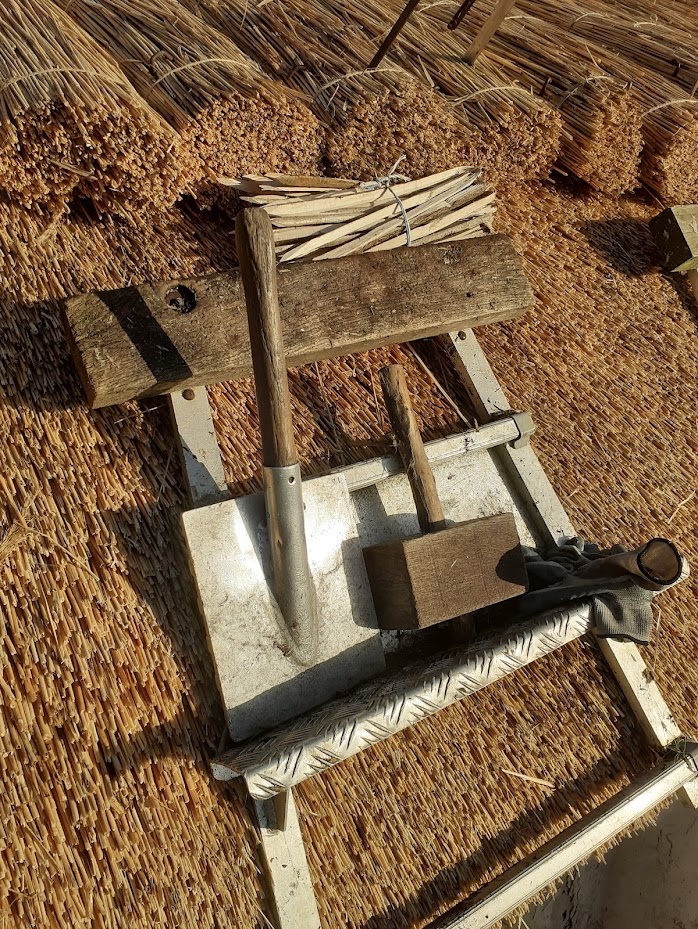
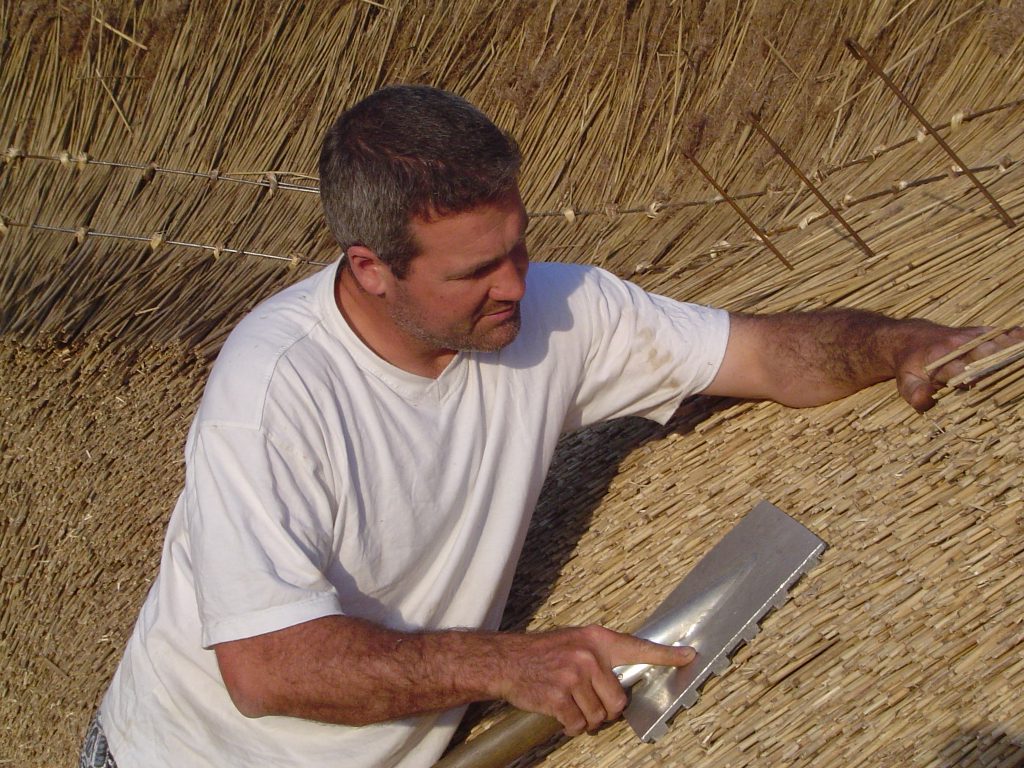
Preparing a base coat comes down to two things. The surface has to be flat and level, and it has to hold a scollop, or spar. If it will not hold a spar, it will not hold the new coat. That sounds simple. It is not. Getting an old roof to that point means no soft spots, no holes, no humps and no hollows, and plenty of firmness all the way across. An uneven or poorly prepared base will show through the new work, and a base that will not take a fixing will not keep the coat on the roof. There is a learned skill in reading what is already there and bringing it to that standard before a single new bundle goes on.
Why the old base coat matters
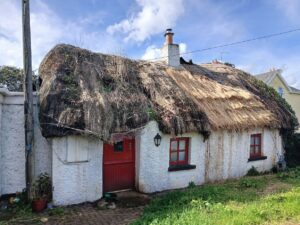
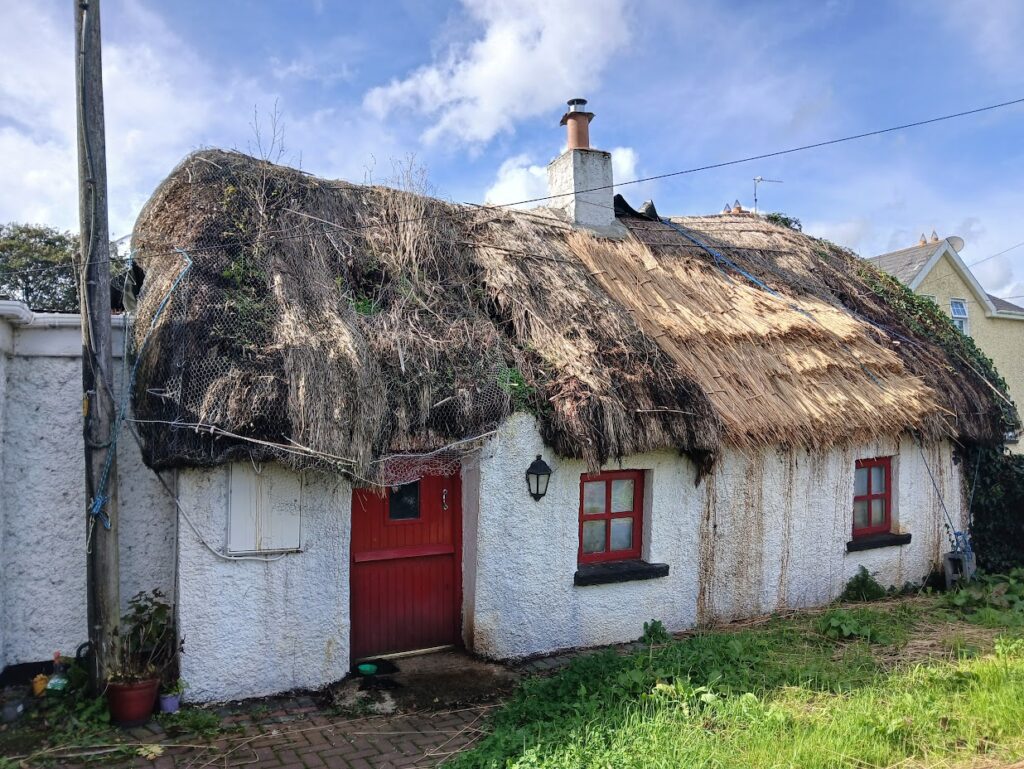
Some thatchers advise homeowners to strip every layer of thatch off the roof, fit new rafters, and start again with a new roof. On many old cottages that means removing three to eight coats, laid one on top of another over decades or centuries, each put on by the method of its own time. Those layers can date back hundreds of years. They are part of the building’s history.
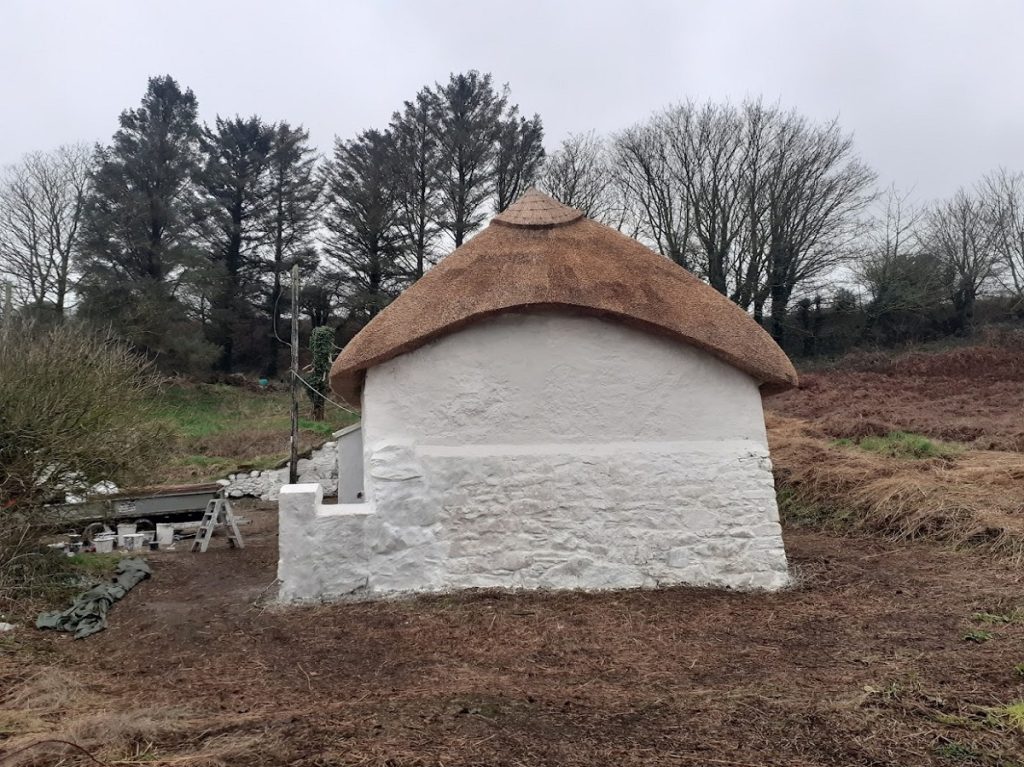
Taking all of that off is, in my view, a sacrilege. It is not necessarily illegal if the cottage is not a listed or protected structure, which is why it still happens. Legality is not the same as good practice. Everything that can reasonably be done should be done to keep the integrity of the old thatch. A sound new coat of water reed, sparred onto a well-prepared base, protects those older layers and leaves them in place for the next generation to inherit. Strip them away and they are gone for good. The skill is in making the existing base fit to take the new coat, not in clearing the roof so that the harder judgment calls disappear with it.
Ridging is another skill entirely, and another one that does not come quickly. The style of ridge used in Ireland varies across the country. Some are plain. Some are far more intricate. The pattern, the cut, the fixing and the way the ridge meets the main coat all have to suit the building and the local tradition. A ridge that looks right on one cottage can look wrong on another a county away. Learning to set out and finish those different styles takes time on the roof, not a short demonstration.
After 25 years I still treat the preparation of the old coat, and the finishing of the ridge, as the parts of the job that separate a sound rethatch from an expensive problem a few years later. Old roofs are not blank canvases. The timber, the previous coats, the pitch, the way the building has moved, and the details that make a particular house or cottage what it is all have to be respected. Keeping the historic value intact is not an optional extra. It is the job.
New work fixed down onto battens is a different task from scolloped thatch on a prepared old base. Both can be done well. They are not the same skill, and a thatcher who is strong at one is not automatically ready for the other.
If you own a thatched roof, the practical point is this: do your research before you hire. Ask what method will be used, whether the existing coats will be kept and prepared or stripped away entirely, and what experience the thatcher has with roofs of your type, age and local ridge style. A low price or a fast start is not a bargain if the person doing the work is still learning your roof at your expense, or if the proposal is to discard layers that a well-prepared base and a good coat of water reed could have preserved. Local knowledge is not a slogan. It is the difference between a roof that belongs on the building and one that merely covers it.
My own workload remains heavy, and I would rather turn work away than put an inexperienced crew on a historic roof. I will keep looking for people who want to learn the trade properly. Nothing in this work comes easy, and the limiting factor on how many roofs I can take is the same one it has been all year: finding hands that already understand, or are willing to stay long enough to learn, the particular demands of these old buildings.